Group Processes and Leadership Lab

Group Processes and Leadership Lab

Our Research Programs

Welcome to our lab website!

In the Group Processes and Leadership Laboratory, we explore social psychological processes within and between groups, their members, and their leaders. We conduct experiments to better understand how group memberships shape the perceptions, cognitions, attitudes, and behaviors that induce conformity, leader preference, group polarization, social influence, and intergroup conflict. It is our hope that studying these processes will help to improve cooperation and coordination within and between groups, organizations, and nations.

Research Program

The Group Processes and Leadership Laboratory has a number of research agendas underway. Our research is theory driven, largely drawing on social identity theory, as well as related subtheories such as the social identity theory of leadership, uncertainty identity theory, and intergroup leadership theory.

Below is a sample of our on-going research programs.

Unexpected Leadership

Social transformation is an ever-present, often disruptive and sometimes violent and destructive feature of the modern world. Leaders play a key role, for good and for evil, in initiating and steering this process that lies at the intersection of social psychological research on leadership, influence and social change. Traditionally, leadership research and practice focus on what we consider to be 'expected' leaders: white men. We are, however, interested in the opposite: how social categories can be transformed, for good or for evil, by what we might call "outsiders", those who are powerless or low-status individuals and members of demographic minorities; marginal, fringe, or atypical members of a group; members of minority subgroups, or factions within a larger group.

Social identity is an important component in this situation, where considerations of followers' self-conception are evoked and managed by the group's leadership. Drawing on the social identity theory of leadership (Hogg, 2001; Hogg, van Knippenberg, & Rast, 2012a), we investigate the group processes and contextual differences that promote the emergence of these 'unexpected' leaders. Integrating uncertainty-identity theory (Hogg, 2007), for instance, we have demonstrated that feelings of uncertainty empower 'unexpected' leaders, ranging from non-representative, fringe, or marginal group leaders (Rast et al., 2012; Rast, Hogg, & Tomory, 2015) to autocratic leaders (Rast, Hogg, & Giessner, 2013) to change-oriented leadership (Rast, Hogg, & Giessner, 2016).

Our current research continues this theme by identifying and investigating the social psychological process that foster 'unexpected' leader emergence in times of uncertainty (see Rast, 2015). This includes, but is not limited to minority influence, leader rhetoric, extremist leadership, and the selection and emergence of female leaders. We are especially interested in how/when leaders, particularly extremist, deviant, or non-prototypical leaders, can strategically use uncertainty to their advantage as a means to strengthen their support by providing ways to ease follower uncertainty and by emphasizing a shared social identity.

In addition to our research program in this area, we also organized a European Association of Social Psychology Small Group Meeting on unexpected leadership (Rast, Hogg, & Randsley de Moura, 2015) and edited a special issue of the Journal of Issues on this topic (Rast, Hogg, & Randsley de Moura, 2018).

Intergroup Leadership

Leaders are often called upon to bring conflict-ridden subgroups together to achieve organizational goals. Conflicts often revolve around self-contained subgroups with distinct identities that define their members. The challenge is to avoid provoking a subgroup identity threat. To address this challenge, Hogg, van Knippenberg, and Rast (2012b) developed a formal theory of intergroup leadership, which argues that effective intergroup leadership requires the leader to develop and promote an intergroup relational identity – a social identity defined in terms of the cooperative and mutually promotive relationship between subgroups.

Our current research examines strategies that help a leader build an intergroup relational identity, including appropriate leadership rhetoric, identity embodiment, and boundary spanning coalitions (e.g., Rast, 2012; Rast, Hogg, & van Knippenberg, in press). We are also applying this theory to real-world situations, such as conducting applied research aimed at improving cross-group interactions between Christians and Muslims in the US or doctors and nurses in hospitals. We hope to create cost-effective training interventions for organizations and militaries to improve collaboration and cooperation between units and departments.

2016 US Presidential Election

We have published theoretically driven research on the past two US Presidential Elections. Our research focuses on understanding the pre-election intergroup context between Democrats and Republicans, and how this shapes the post-election intragroup and intergroup context. We have published recently examining the effects of winning and losing the Presidency on perceived attitudinal similarity of voters and the Democrat and Republican Presidential candidates (Alabastro, Rast, et al., 2013); we examined how voters respond ingroup and outgroup Presidential candidates following an intergroup success or failure (Rast, Hackett, Alabastro, & Hogg, 2014); and finally, we investigated the impact of the Tea Party on Democratic and Republican attitudes (Gaffney, Rast, et al., 2014).

Building off these studies, we are currently studying the impact of the Republican primary candidates (and their policy positions) on voter attitudes. Once the Republican (Trump) and Democratic (Clinton) candidates were selected, we then moved forward to examine the intergroup relations between constituents and how this impacts Presidential voting intention. Since Trump's electoral victory in November 2016, we have continued conducting experiments and surveys investigating the impact of Trump's leadership on group processes and intergroup relations within the US and abroad, including but not limited to collective action and protest (Gaffney, Hackett, Rast, Hohman, & Jaurique, in press), prejudice and discrimination, social change, equality, deviance, group polarization, and intra- and intergroup communication.

Members

Principal Investigator

Rast - Website

David Rast, III, Director

David is an associate professor of social psychology and leadership at the University of Alberta. David has two primary lines of research drawing extensively on social identity and self-categorization theories, as well as related subtheories. First, he is interested in understanding how leaders elicit or incite social and organizational change by going against their group's norms. Second, he is interested in understanding how leaders can bridge profound intergroup divisions to build a unified identity and achieve a joint goal. Other lines of research are related to these two themes, exploring the processes and implications of political identity, minority influence, deviance, intergroup cooperation/conflict, leader rhetoric, and organizational behavior. David's work is generously supported by the Social Sciences and Humanities Research Council of Canada (SSHRC).

David completed his PhD and Master's at Claremont Graduate University (USA) during which time he was a Predoctoral Research Fellow for the U.S. Army Research Institute's Leader Development Research Unit at Fort Leavenworth in Kansas (USA). Prior to joining the Department of Psychology at the University of Alberta in 2015, he was an assistant professor at the University of Sheffield's Institute of Work Psychology (UK). David currently serves as Associate Editor for the Journal of Applied Social Psychology, Consulting Editor for Group Processes and Intergroup Relations, and is appointed to the Editorial Boards of Self and Identity and the Journal of Theoretical Social Psychology. In 2018, David was elected as a Fellow of the Society for Experimental Social Psychology.

Lab Managers

Kriza Begnaen

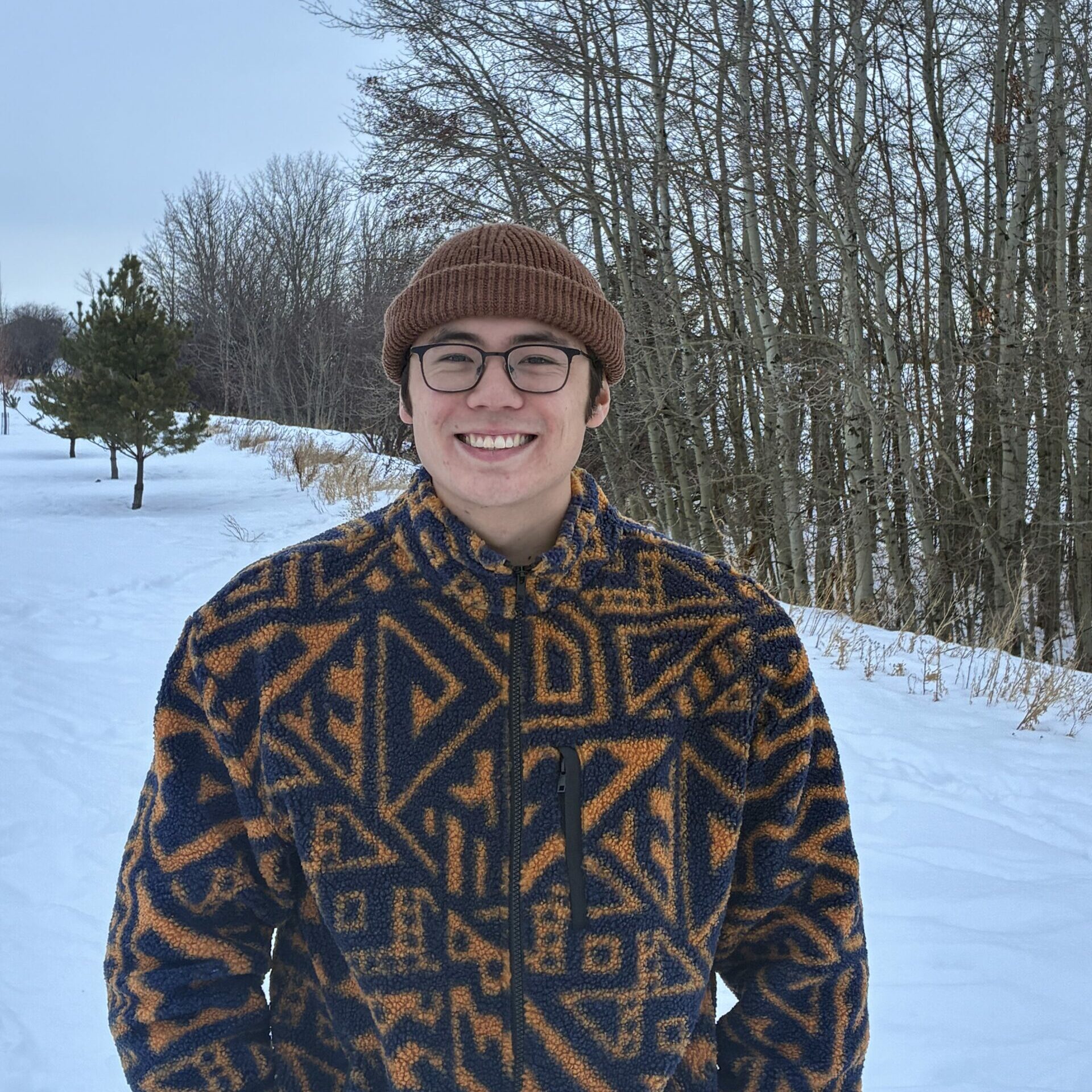
Kriza Begnaen is a fifth-year undergraduate student majoring in both psychology and sociology. He is interested in social psychology, especially when it comes to looking at demographic minorities. Kriza plans to pursue a masters degree in counselling psychology after he completes his undergraduate degree.

Mohammed Ali

Mohammed Ali is a sixth-year undergraduate psychology specialization student in the Faculty of Science. He is interested in developing his research skills and the links between psychology and leadership, and is hoping to pursue a master's degree in psychology and enter the field of clinical psychology.

Graduate Students

Angela Ma

Angela Ma is in the fourth year of her PhD program at the University of Alberta. She is interested in the ability of leaders to promote social identity change in their group. Her current research focuses on the impact of leader rhetoric on what followers perceive as normal within their groups. Angela completed her undergraduate degree at the University of Alberta, and she is continuing in the graduate program after successfully defending her Master's thesis, Divide and Conquer: Effects of Highlighting Sub-Group Divisions on Leader Support from the Majority.

Ma, A. C., Rast, D. E. III, & Wohl, M. J. A. (2025, February). When leaders apologize: The influence of leader prototypicality on public support for Tim Cook in the wake of the Apple Batterygate scandal. Poster accepted for presentation at the 26th annual conference for the Society of Personality and Social Psychology (SPSP), Denver, CO, USA.

Ma, A. C. & Wohl, M. J. A. (2024, February). An apology for all of us: Effects of prototypicality in perpetrator group's support for a leader following intergroup apology. Poster accepted for presentation at the 25th annual conference for the Society of Personality and Social Psychology (SPSP), San Diego, CA, USA.

Kincaid, K. M., Ma, A. C., Rast III, D. E., & Hogg, M. A. (2024). That's my autocrat: Self-uncertainty elevates support for autocratic leadership during Canada's Freedom Convoy. Analyses of Social Issues and Public Policy. https://doi.org/10.1111/asap.12414

Ma, A. C., Rast, D., Gaffney, A. M. (2023, February). Setting the standard: Leaders changing perceived norms within groups. Poster accepted for presentation at the 2023 Society for Personality and Social Psychology Group Processes and Intergroup Relations (GPIR) pre-conference, Atlanta, GA, USA.

Ma, A. C., Rast, D. E. III., & Gaffney, A. M. (2022, June) Setting the standard: Leaders changing perceived norms within groups [data blitz presentation]. 2022 Canadian Psychological Association Social & Personality preconference, Calgary, AB, Canada.

Ma, A. C., Rast, D. E. III., & Gaffney, A. M. (2022, February). "Our" values: Effects of leader rhetoric on perceptions of multiculturalism. Poster accepted for the 23rd annual conference for the Society for Personality and Social Psychology (SPSP).

Kathryn Kincaid

Kathryn Kincaid is a PhD student in Social Psychology at the University of Alberta. Her research interests center on marginal, unexpected, and non-prototypical leadership. She is particularly interested in the effects of social identity complexity and uncertainty on support for autocratic leaders. She previously earned her Master's degree in Psychology at the University of Alberta and her Bachelor's degree in Psychology, Education, and Spanish from Butler University (Indianapolis, United States).

Anjewierden, B., Kincaid, K., Gaffney, A. M., & Rast, D. E. III (forthcoming). Uncertainty and social identity. In K. Vail, D. Van Tongeren, B. Schlegel, J. Greenberg, L. King, & R. Ryan (Eds.), Handbook of the Science of Existential Psychology.

Kincaid, K. M., Ma, A. C., Rast III, D. E., & Hogg, M. A. (2024). That's my autocrat: Self-uncertainty elevates support for autocratic leadership during Canada's Freedom Convoy. Analyses of Social Issues and Public Policy. https://doi.org/10.1111/asap.12414

Ouyang, Y., Kincaid, K. M., Rast, D. E. III, Gaffney, A. M., & Hogg, M. A. (2024). Incumbency and uncertainty: When prototypical leaders lose their advantage. Journal of Social Psychology. https://doi.org/10.1080/00224545.2024.2325420.

Kincaid, K. & Rast, D. E. III (2023). Social identity theory. In G. R. Goethals, S. T. Allison, & G. J. Sorenson (Eds.), Encyclopedia of Leadership Studies (2nd ed.) SAGE. https://doi.org/10.4135/9781071840801

Kincaid, K. & Rast, D. E. III (2019). Hogg, Michael A. In V. Zeigler-Hill & T. K Shackelford (Eds.) Encyclopedia of Personality and Individual Differences. Springer. https://doi.org/10.1007/978-3-319-28099-8_1756-1

Undergraduate Research Assistants

Saraiah Cottrell

Saraiah Cottrell is a fifth-year honors psychology student. She is interested in exploring social psychology, specifically social identity and leadership. Saraiah plans to pursue a masters and a PhD in clinical psychology.

Dhanika Purmanan

Dhanika Purmanan is a first-year MSc Public Health student and a recent graduate with a BSc Honors in Psychology. She has a keen interest in public health and evaluation, particularly in the early childhood sector. Additionally, she is focused on social psychology, exploring areas such as group dynamics, autocratic leadership, and the effects of uncertainty on leadership support.

Cassidy Lin

Cassidy Lin is a fifth-year student in the Faculty of Arts, majoring in Psychology. She is particularly interested in social psychology and intergroup communication, especially between various cultures, ethnic groups and types of leadership. After completion of her undergraduate degree, she is hoping to pursue a master's degree in social psychology.

Dilnaz Mansurova

Dilnaz Mansurova is a recent graduate of the Faculty of Arts, majoring in Psychology. She is deeply curious about intragroup trust, particularly towards the leader, and the relationship between uncertainty, group identity, and autocratic leadership. Once she completes her bachelor's degree, she plans to pursue a Board Certified Behavior Analyst certification.

Ella Neuman

Ella Neuman is a recent graduate in psychology and a political science minor. She is interested in political psychology, counselling psychology, and forensic psychology. After completing her BA, Ella plans on pursuing graduate studies in either counselling psychology or forensic psychology.

Morgan Benterud

Morgan Benterud is a recent graduate in psychology. She is interested in social psychology and interpersonal relationships. After completion of her undergraduate degree, she plans to pursue a master's and possibly a Ph.D. in clinical psychology.

Mya Gaudet

Mya Gaudet is a fourth-year Psychology student with a keen interest in social psychology, particularly in exploring relationships and group interactions. Mya plans to pursue a master's and a PhD in clinical psychology, with the goal of working with diverse communities in the future.

Yami Patel

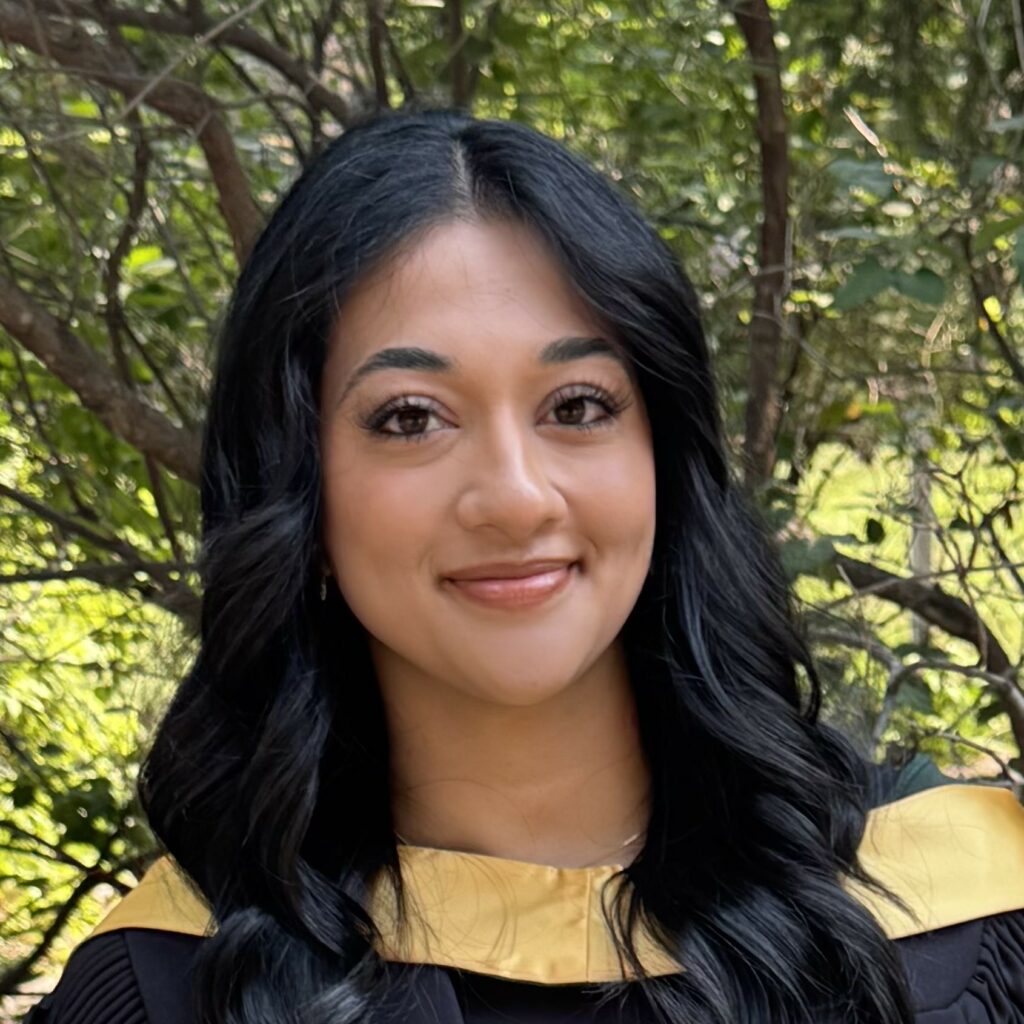
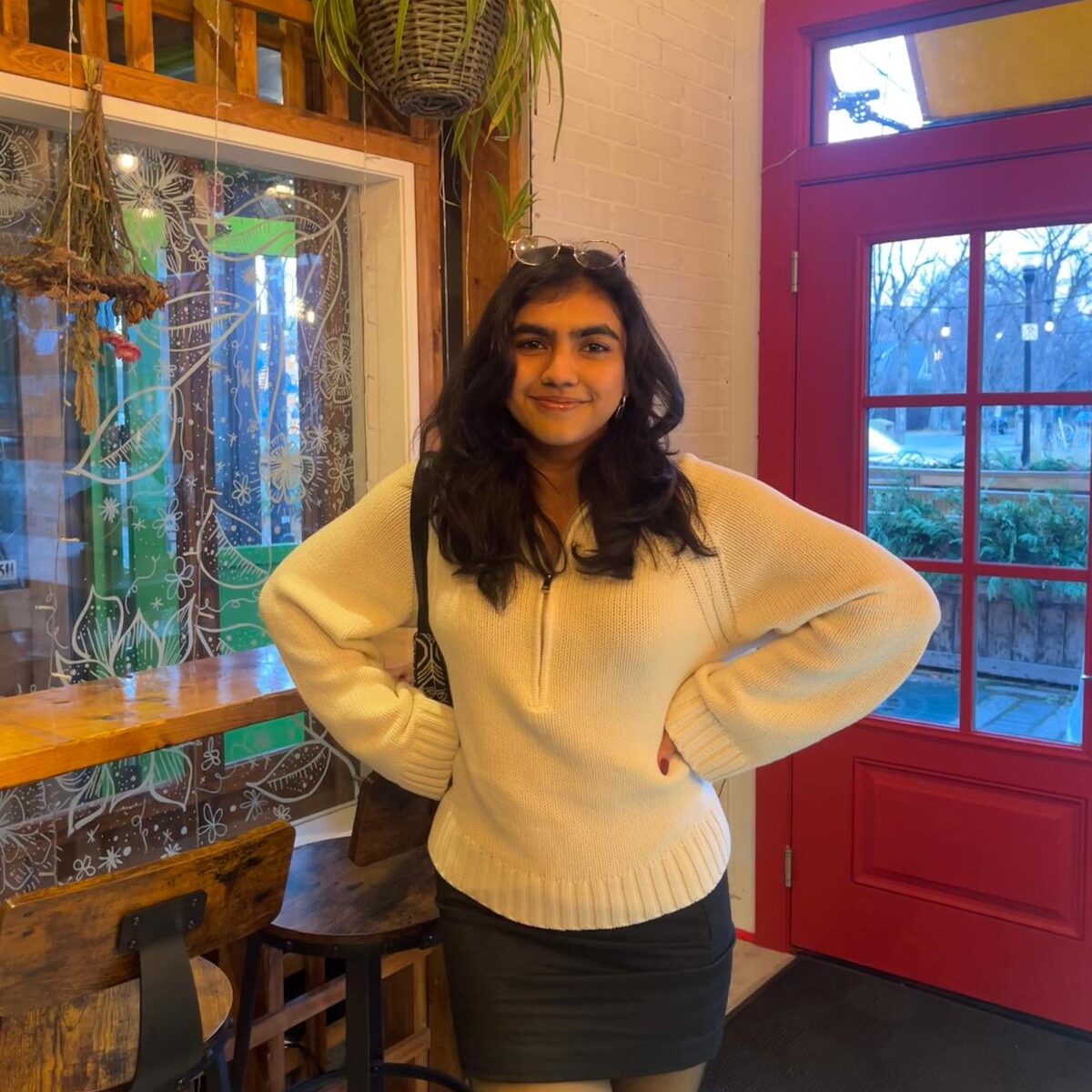
Yami Patel is a fifth-year psychology major with a sociology minor in the Bachelor of Arts. She is interested in social psychology, with a focus on how marginalized and underrepresented groups can emerge as unconventional leaders and what that would change for society. In the future, she plans on attending graduate school for counselling, clinical or forensic psychology.

Akila Edirisinghe

Akila Edirisinghe is a fifth-year psychology and computer science student. He is interested in social psychology, particularly topics like intergroup dynamics, cohesion and development. He is planning to attend graduate school to possibly pursue a masters in social psychology.

Harshita Gonella

Harshita Gonella is a recent B.Sc. Psychology graduate from the University of Alberta, with a minor in Biology and a Research Certificate in Science. She is particularly interested in social psychology, identity theory, cultural psychology, and developmental psychology, and in how these domains inform our understanding of the mental health of marginalized and vulnerable populations. Harshita plans to pursue a master's degree in Clinical or Counselling Psychology.

Ishita Parikh

Ishita Parikh is in her last year of completing her Bachelor of Science degree in psychology, with a minor in Biological Sciences. Her interests include the modification of human and animal behaviour, as well as exploring how social persuasion leads to conformity. After completing her degree, she plans to pursue graduate studies in psychology and enter the field of research and teaching.

Quenelle Peckham

Quenelle Peckham is a second-year psychology student majoring in psychology with a minor in sociology. She is interested in the causes of mental disorders as well as forensic psychology. She wants to understand how social structures and experiences result in mental health issues and delinquency. After her bachelor's, she plans to obtain a PhD to conduct research in the field of forensic psychology.

Eva Sharon

Eva Sharon is a fifth-year student majoring in Psychology and pursuing three certificates at the University of Alberta. She is interested in gaining more research experience and is curious about topics relating to social psychology, developmental psychology, behaviour analysis and anything relating to people's mental and physical wellbeing. She is currently applying for a counselling or clinical psychology graduate degree.

Ritika Raval

Ritika Raval is a fifth-year student majoring in Psychology. She is interested in learning about group processes and how leaders emerge during times of crisis. She hopes to pursue her Master's in clinical psychology, focusing on the forensic aspect of it.

Ghazal Pakseresht

Ghazal Pakseresht is a fourth-year Bachelor of Science student majoring in psychology with a minor in biological sciences. She is especially interested in social psychology, focusing on how individual identities connect with collective societal identities to create a shared sense of purpose. After finishing her undergraduate studies, Ghazal aims to pursue a Master's degree in clinical psychology to become a therapist.

Mana Espinoza

Mana Espinoza is a third-year undergraduate student majoring in Psychology with a minor in Sociology. She is specifically interested in leadership in social psychology, including intergroup leadership theory, and in how followership influences a leader. After completing her undergraduate degree, she hopes to apply her research skills and knowledge in her career with the Canadian Armed Forces.

Holden Craig

Holden Craig is a fourth-year Bachelor of Science Honors student majoring in Psychology. He has a wide range of interests, from the media's influence on social norms and the role of aggression in social messaging to Jungian archetypes and the psychology of dreams. After his undergrad, he plans to pursue graduate studies in counselling psychology.

Mishthi Batra

Mishthi Batra is a fourth-year Psychology Honors student. Her research interests focus on interpersonal relationships, conformity, and group processes, particularly how social belonging and peer influence shape attitudes, behaviour, and decision-making within groups. She is especially interested in how group dynamics influence relationship formation, identity, and social behaviour. In the future, Mishthi hopes to pursue graduate studies in clinical or developmental psychology.

Samantha Smith

Samantha Smith is a fourth-year undergraduate student majoring in Psychology with a minor in Economics at the University of Alberta. She is interested in social psychology, particularly belief formation, decision-making, emotion, and motivation in group and interpersonal contexts. She is especially interested in how emotional processes influence belief updating and social judgments. After completing her undergraduate degree, Samantha hopes to pursue graduate studies in counselling or clinical psychology.

Aneesha Sorensen

Aneesha Sorensen is a fourth-year BA student majoring in Psychology with a minor in Business. She also volunteers with the END Lab. These experiences have expanded her interests within psychology and strengthened her passion for learning and research.

Elijah Kong

Elijah Kong is a 3rd year undergraduate psychology student minoring in mathematics. He is interested in group processes and social decision making, particularly as they relate to suicide prevention. After his bachelor's, he plans to gain more research experience through graduate studies.

Farah Elgnaoui

Farah Elgnaoui is a fourth-year Honours Psychology student in the Faculty of Science. She is currently interested in developmental psychology, cultural psychology, and clinical psychology. After completing her undergraduate degree, she plans to pursue a master's degree and possibly a Ph.D. in clinical psychology.

Meghana Ramanatham

Meghana Ramanatham is a third-year Bachelor of Science student majoring in Psychology. Her primary research interests lie in social psychology, particularly moral psychology and the cognitive and social processes that influence moral reasoning. After completing her undergraduate degree, she hopes to pursue graduate studies in clinical or experimental psychology.

Affiliate Lab Members

We actively collaborate with a number of scholars and researchers at other universities around the world. This is a brief list of people with whom we have active and on-going research collaborations.

Richard J. Crisp

Richard J. Crisp is a professor of psychology and Head of the Department at Durham University (UK). Rich has published widely on diversity, multiculturalism, prejudice, stereotyping, social cognition and intergroup contact.

Amber M. Gaffney

Amber M. Gaffney is an assistant professor of psychology at Humbodlt State University (USA). Her research focuses on minority influence, group polarization, leadership, and attitude change from a social identity and self-categorization perspective.

Steffen Giessner

Steffen Giessner is a professor of organizational behavior and change at the Rotterdam School of Management (Netherlands). His primary research topics are employee support during organizational merger, follower's perceptions of leadership, antecedents of leader behavior, and non-verbal communication of power.

Justin D. Hackett

Justin D. Hackett is an associate professor of psychology at California University of Pennsylvania (USA). His research interests include political psychology, social change, social influence, social engagement and sense of community.

Michael A. Hogg

Michael A. Hogg is a professor of social psychology at Claremont Graduate University (USA). Mike's research focuses on group processes, intergroup relations and the self-concept. His is closely associated with social identity theory, and he is considered the leading world expert on the social identity and self-categorization theories.

Georgina Randsley de Moura

Georgina Randsley de Moura is a professor of social psychology at the University of Kent (UK). Her research is principally in the areas of leadership, innovation and what happens when group members break rules or norms. Her research focuses intra-and intergroup dynamics and social psychology in organizations.

Daan van Knippenberg

Daan van Knippenberg is the Joseph F. Rocereto Professor of Management at Drexel University's LeBow College of Business (USA). Daan's work closely associated with the organizational application of social identity theory. He has published extensively on topics such as leadership, diversity, team cognition, and creativity.

Dr. David Rast lll's input on The US Presidential Elections 2020 on Global News. Time-cut: 8:46

Publication and Papers

Book Chapters and Edited Volumes

Anjewierden, B., Kincaid, K., Gaffney, A. M., & Rast, D. E. III (forthcoming). Uncertainty and social identity. In K. Vail, D. Van Tongeren, B. Schlegel, J. Greenberg, L. King, & R. Ryan (Eds.), Handbook of the Science of Existential Psychology.

Rast, D. E. III, & Gaffney, A. M. (in press). Group processes. In R. Crisp, R. Turner, D. Blaylock, & M. Vasiljevic (Eds.), Essential Social Psychology (4th edition). London: Sage.

Kershaw, C., & Rast, D. E. III (2023). Intergroup processes. In G. R. Goethals, S. T. Allison, G. J. Sorenson (Eds.), The SAGE Encyclopedia of Leadership Studies (pp. 494-497). Thousand Oaks, CA: Sage. doi:10.4135/9781071840801

Kincaid, K., & Rast, D. E. III (2023). Social identity theory. In G. R. Goethals, S. T. Allison, G. J. Sorenson (Eds.), The SAGE Encyclopedia of Leadership Studies (pp. 879-883). Thousand Oaks, CA: Sage. doi:10.4135/9781071840801

Haslam, A. S., Hogg, M. A., Rast, D. E. III, Steffen, N. K., & Gaffney, A. M. (Eds) (2022). Social Identity and Leadership (Special issue of The Leadership Quarterly). New York: Elsevier.

Syfers, L., & Rast, D. E. III (in press). Marilynn Brewer. In V. Zeigler-Hill & T. K. Shackelford (Eds.), Encyclopedia of Personality and Individual Differences. New York: Springer.

Kincaid, K., & Rast, D. E. III (2021). Michael Hogg. In V. Zeigler-Hill & T. K. Shackelford (Eds.), Encyclopedia of Personality and Individual Differences (pp. 1-8). New York: Springer

Syfers, L., & Rast, D. E. III (2021). Marilynn Brewer. In V. Zeigler-Hill & T. K. Shackelford (Eds.), Encyclopedia of Personality and Individual Differences (pp. 1-8). New York: Springer.

Kershaw, C., & Rast, D. E. III (2020). Social influence and leadership. In O. Braddick (Ed.), Oxford Encyclopedia of Social Psychology. Oxford: Oxford University Press. doi:10.1093/acrefore/9780190236557.013.252

Rast, D. E. III, Hogg, M. A., & Randsley de Moura, G. (Eds.) (2018). Unexpected leadership: How marginal individuals and groups lead social transformation (Special issue of Journal of Social Issues). Boston: Wiley-Blackwell.

*Ma, A., & Rast, D. E. III (2017). Optimal distinctiveness theory. In V. Zeigler-Hill & T. K. Shackelford (Eds.), Encyclopedia of Personality and Individual Differences (pp. 1-8). New York: Springer. doi:10.1007/978-3-319-28099-8_1144-1

Rast, D. E. III, & Hogg, M. A. (2017). Leadership in the face of crisis and uncertainty. In J. Storey, J. Hartley. J. Denis, P. Hart, & D. Ulrich (Eds.) The Routledge Companion to Leadership (pp. 52-64). New York: Routledge.

Tomory, J. J., & Rast, D. E. III (2016). Group power and leadership. In A. Farazmand (Ed.), Global Encyclopedia of Public Administration and Public Policy (pp. 1-7). New York: Springer. doi:10.1007/978-3-319-31816-5_1402-1

Rast, D. E. III, Axtell, C., & McGlynn, S. (Eds., 2016). Work, Well-being, and Leadership (Special issue of Journal of Applied Social Psychology). Boston: Wiley.

Rast, D. E. III, Gaffney, A. M., & Hogg, M. A. (2013). The tyranny of normative distance: A social identity account of the exercise of power by remote leaders. In M. C. Bligh & R. E. Riggio (Eds.), Exploring Distance in Leader-Follower Relationships: When Near is Far and Far is Near (pp. 215-240). New York: Taylor and Francis.

Siegel, J. T., Crano, W. D., Alvaro, E. A., Lac, A, Rast, D. E. III, & Kettering, V. (2012). Dying to be popular: A purposive explanation of adolescent willingness to endure harm. In M. A. Hogg & D. L. Blaylock (Eds.) Extremism and the Psychology of Uncertainty (pp. 115-130). Boston: Wiley-Blackwell.

Mahajan, N., & Rast, D. E. III (2010). Self-enhancement. In R. L. Jackson II (Ed.), Encyclopedia of Identity (pp. 690-694). Thousand Oaks, CA: SAGE.

Rast, D. E. III (2010). Organizational identity. In R. L. Jackson II (Ed.), Encyclopedia of Identity (pp. 514-516). Thousand Oaks, CA: SAGE.

Journal Articles

Kincaid, K., Ma, A. C., Rast, D. E. III, & Hogg, M. A. (in press). That's my autocrat: Self-uncertainty elevates support for autocratic leadership during Canada's Freedom Convoy. Analyses of Social Issues and Public Policy.

Ouyang, Y., Kincaid, K., Rast, D. E. III, Gaffney, A. M., & Hogg, M. A. (in press). Incumbency and uncertainty: When prototypical leaders lose their advantage. Journal of Social Psychology. doi:10.1080/00224545.2024.2325420

Syfers, L., Rast, D. E. III., & Gaffney, A. M. (2024). This will not change us: Leaders' use of identity continuity rhetoric to promote collective change. Journal of Experimental Social Psychology. doi:10.1016/j.jesp.2023.104550

Syfers, L., Royer, Z., Anjewierden, B., Rast, D. E. III., & Gaffney, A. M. (2024). Our group is worth the fight: Group cohesion is embedded in willingness to fight or die for relatively deprived political groups during national elections. Translational Issues in Psychological Science. doi:10.1037/tps0000381

Syfers, L., Jaurique, A., Anjewierden, B., Burke, S. E., Hackett, J. D., Rast, D. E. III, & Gaffney, A. M. (2023). Self-uncertainty and conservatism during the COVID-19 pandemic predict perceived threat and engagement in risky social behaviors. Group Processes & Intergroup Relations. https://doi.org/10.1177/13684302231180525

Hogg, M. A., & Rast, D. E. III. (2022). Intergroup leadership: The challenge of successfully leading fractured groups and societies. Current Directions in Psychological Science, 31, 564-571. doi:10.1177/09637214221121598

Haslam, A. S., Gaffney, A. M., Hogg, M. A., Rast, D. E. III, & Steffen, N. K. (2022). Reconciling identity leadership and leader identity: A dual-identity framework. The Leadership Quarterly. (Special Issue on "Social identity and leadership"). doi:10.1016/j.leaqua.2022.101620

Syfers, L., Gaffney, A. M., Rast, D. E. III, & Estrada, D. A. (2022). Communicating group norms through election results. The British Journal of Social Psychology, 61, 300-321. doi:10.1111/bjso.12481

Kershaw, C., Rast, D. E. III, Hogg, M. A., & van Knippenberg, D. (2021). Battling intergroup bias with constructive leadership. British Journal of Social Psychology, 60, 765-785. doi:10.1111/bjso.12445

Kershaw, C., Rast, D. E. III, Hogg, M. A., & van Knippenberg, D. (2021). Divided groups need leadership: A study of the effectiveness of collective identity, dual identity, and intergroup relational identity rhetoric. Journal of Applied Social Psychology, 51, 53-62. doi:10.1111/jasp.12715

Syfers, L., Rast, D. E. III, & Gaffney, A. M. (2021). Leading change by protecting group identity in the 2019 Canadian general election. Analyses of Social Issues and Public Policy, 21, 415-438. doi:10.1111/asap.12255

Hackett, J. D., Rast, D. E. III, & Hohman, Z. P. (2020). Identification with the American south and anti-Muslim attitudes. Journal of Social Psychology, 160, 150-163. doi:10.1080/00224545.2019.1634506

Ouyang, Y., Rast, D. E. III, Hackett, J. D., & Hohman, Z. P. (2020). The American south: Explorations on southern attachments and personal values. Journal of Social Psychology, 160, 137-149. doi:10.1080/00224545.2019.1629866

Rast, D. E. III, van Knippenberg, D., & Hogg, M. A. (2020). Intergroup relational identity: Development and validation of a scale and construct. Group Processes & Intergroup Relations, 23, 943–966. doi: 10.1177/1368430219883350

Gaffney, A. M., *Sherburne, B., Hackett, J. D., Rast, D. E. III, & Hohman, Z. P. (2019). The transformative and informative nature of elections: Representation, schism, and exit. British Journal of Social Psychology, 58, 88-104. doi: 10.1111/bjso.12279 (Special Issue on "Understanding rapid societal change: Emerging perspectives and methods")

Gaffney, A. M., Hackett, J. D., Rast, D. E. III., Hohman, Z. P., & *Jaurique, A. (2018). The state of American protest: Shared anger and populism. Analyses of Social Issues and Public Policy, 18, 11-33. doi:10.1111/asap.12145

Rast, D. E. III, Gaffney, A. M., & *Yang, L. (2018). The impact of stereotype content on intergroup uncertainty and interactions. Journal of Social Psychology, 158, 711-720. doi:10.1080/00224545.2017.1407285

Rast, D. E. III, Hogg, M. A., & van Knippenberg, D. (2018). Intergroup leadership across distinct subgroups and identities. Personality and Social Psychology Bulletin, 44, 1090-1103. doi: 10.1177/0146167218757466

Gaffney, A. M., Rast, D. E. III, & Hogg, M. A. (2018). Unexpected leadership under uncertainty: A social identity analysis of non-prototypical leader emergence. Journal of Social Issues, 74, 20-35. doi: 10.1111/josi.12254

Rast, D. E. III, Hogg, M. A., & Randsley de Moura, G. (2018). Unexpected leadership: How marginal individuals and groups lead social transformation. Journal of Social Issues, 74, 8-19. doi:10.1111/josi.12253

Rast, D. E. III, Axtell, C., & McGlynn, S. (2016). (Re)Applying social psychology to organizational work, well-being, and leadership. Journal of Applied Social Psychology, 46, 3-6. doi:10.1111/jasp.12363

Rast, D. E. III, Hogg, M. A., & Giessner, S. R. (2016). Who trusts charismatic leaders who champion change? The role of group identification, membership centrality and self-uncertainty. Group Dynamics: Theory, Research, and Practice, 20, 259-275. doi:10.1037/gdn0000053

Rast, D. E. III (2015). Leadership in times of uncertainty: Recent findings, debates, and potential future research directions. Social and Personality Psychology Compass, 9, 133-145. doi:10.1111/spc3.12163

Rast, D. E. III, Hackett, J. D., Alabastro, A. B., & Hogg, M. A. (2015). Revoking a leader's 'license to fail': Downgrading evaluations of prototypical ingroup leaders following an intergroup failure. Journal of Applied Social Psychology, 45, 311-318. doi:10.1111/jasp.12297

Rast, D. E. III, Hogg, M. A., & Tomory, J. J. (2015). Prototypical leaders do not always get our support: Impact of self-uncertainty and need for cognition. Self and Identity, 14, 135-146. doi:10.1080/15298868.2014.964755

Gaffney, A. M., Rast, D. E. III, Hackett, J. D., & Hogg, M. A. (2014). Further to the right: Uncertainty, political polarization and the American "Tea Party" movement. Social Influence, 9, 272-288. doi:10.1080/15534510.2013.842495

Alabastro, A. B., Rast, D. E. III, Lac, A., Hogg, M. A., & Crano. W. D. (2013). Intergroup bias and perceived similarity: The effects of successes and failures on support for in- and outgroup political leaders. Group Processes and Intergroup Relations, 16, 58-67. (Special Issue on "Leading Groups: Leadership as a Group Process") doi:10.1177/1368430212437212

Rast, D. E. III, Hogg, M. A., & Giessner, S. R. (2013). Leadership under uncertainty: The appeal of strong leaders and clear identities. Self & Identity, 12, 635-649. doi:10.1080/15298868.2012.718864

Currently the 7th most read/downloaded article of all-time at Self & Identity, with over 5,200 downloads

Hogg, M. A., van Knippenberg, D., & Rast, D. E. III (2012). Intergroup leadership in organizations: Leading across group and organizational boundaries. Academy of Management Review, 37, 232-255. doi:10.5465/amr.2010.0221

Hogg, M. A., van Knippenberg, D., & Rast, D. E. III (2012). The social identity theory of leadership: A decade of research and conceptual development. European Review of Social Psychology, 23, 258-304. doi:10.1080/10463283.2012.741134

Currently the 6th most read article of all-time at European Review of Social Psychology, with 5,800 downloads

Rast, D. E. III, Gaffney, A. M., Hogg, M. A., & Crisp, R. J. (2012). Leadership under uncertainty: When leaders who are non-prototypical group members can gain support. Journal of Experimental Social Psychology, 48, 646-653. doi:10.1016/j.jesp.2011.12.013

*denotes undergraduate or Master's student contributor

Join the Lab

Thank you for your interest in becoming involved in our lab. We are currently accepting applications for undergraduate and graduate students, as well as postdoctorate and visiting researchers. Please see the guidelines and information below for each respective category.

Undergraduate Research Opportunities

Undergraduate research assistants form the foundation of the Group Processes and Leadership Lab. We are currently seeking highly motivated, dedicated, and responsible volunteer research assistants who are interested in social psychology research. Research assistants will work under the direction of the Primary Investigator, Dr. David Rast. David works directly with undergraduate research assistants, providing them with hands-on engagement in the research process and personalized mentorship. Research Assistants will also have the opportunity to work with graduate students and fellow research assistants, and will learn about ongoing research in our lab. The tasks assigned to research assistants depend on the nature of the project. Duties include participant recruitment, running experiments, debriefing participants, study design feedback, data entry, coding, and management, preparing study materials, literature reviews, grant and article proofreading, and data analysis. This position is especially ideal for students who are planning to pursue graduate study.

The university and department offer a range of opportunities for students to get involved in research. These include the research opportunity program (PSYCO 299), independent study (PSYCO 496/498), a research apprenticeship through the honors program, as well as on a volunteer basis. We strongly encourage students to explore funding opportunities for their research. To be considered for a Research Assistant position, please complete the application and send a copy of your CV/resume and transcripts to Dr. David Rast. These positions are competitive; therefore, we cannot accommodate all applicants. Well-qualified applicants should have a strong academic background and be organized, reliable, conscientious, detail-oriented, and interested in psychology research.

The Group Processes and Leadership Lab application can be found at: https://goo.gl/forms/1PHDOA0eN4cm7nyE2

Graduate Research Opportunities

The University of Alberta offers a full-time post-graduate program in psychology. If you are interested in pursuing an MA/MSc or PhD in basic or applied social psychology, please send Dr. David Rast your application materials, which should include transcripts, GRE scores, statement of research interests, and CV. Also be sure to complete the appropriate applications as designated on the Department of Psychology webpage.

MA/MSc and PhD Programs: We offer full-time programs of study leading to an MA/MSc or Ph.D. in psychology. The program is research-oriented, following an apprenticeship model. This means that students work closely with a faculty member in developing their research skills, and most program requirements (required courses and major projects) are designed to foster students' ability to pursue independent research. It is anticipated that most students will initially need significant guidance in developing research projects; however, by the end of the program students should have developed into independent researchers.

Highly motivated students who wish to pursue a master's or doctorate can apply for the Department of Psychology. In this application, you will need to specify the Social and Cultural Psychology group, as well as a potential supervisor from our faculty group.

Post-doctoral and Visiting Researcher Opportunities

If you are interested in pursuing a postdoc or visiting scholar position in the Group Processes and Leadership Lab, please contact David directly for information. Unless otherwise specified, all postdocs and visiting scholars must obtain external funding to support their visit. Please note, as lab funding becomes available, any funded postdoc position will be posted here, as well on the Department of Psychology and U of A HR websites.